The difference is where the workflow begins.
Choose Arcads if
- You already have scripts and creative direction.
- You want a large actor library for short UGC-style reads.
- You can absorb a paid test before judging the platform.
Do not choose it first if transparent entry pricing, a meaningful free trial, or low-risk refund flexibility is essential.
Choose Creatify if
- Your starting asset is a Shopify, Amazon, or other product page.
- You want scripts, templates, actors, and ad assembly together.
- You need a free test before committing to a subscription.
Do not assume that 100 credits means 20 publishable ads. Output quality and revisions determine the real economics.
For most ecommerce visitors, the next click should be Creatify's free test. Arcads becomes the conversion path when the buyer already knows the product page and script are strong, but needs more actor-led UGC variations.
Arcads or Creatify: the short answer by buying job.
Which is better for ecommerce ads?
Creatify is the stronger first test when a product URL should become the starting script and ad draft. Arcads is the specialist choice when the product, offer, and script already exist and actor variety is the missing input.
Which is cheaper to test?
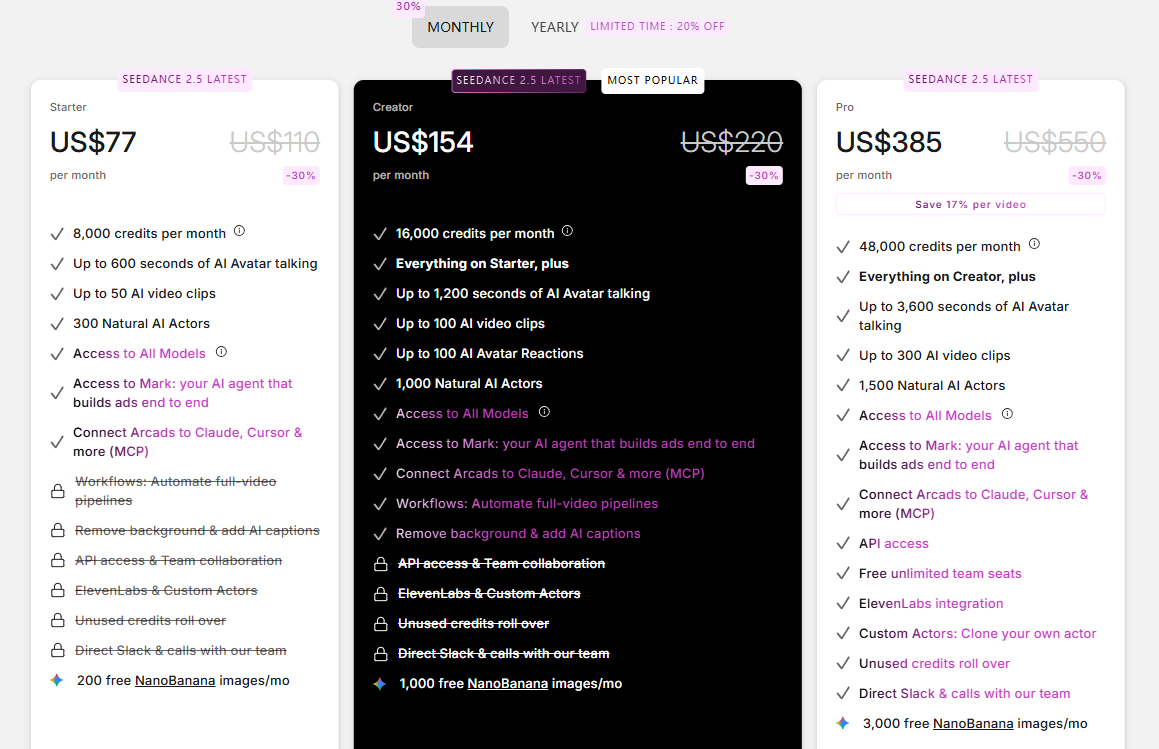
Creatify has the lower-risk entry because its free plan exposes part of the core URL-to-ad workflow. The Arcads paywall we captured starts at $77 per month during the shown promotion.
Do either of them replace ad editing?
No. Both can reduce production work, but claims review, pacing, captions, product accuracy, brand checks, and final campaign approval still need a human workflow.
What happens after you arrive with a product and an offer?
Arcads is easier to understand as an actor-generation layer inside an ad workflow. Creatify is trying to own more of that workflow, beginning with product information and continuing through scripts, templates, and generation.
Which differences change the buying decision?
| Factor | Arcads | Creatify | Why it matters |
|---|---|---|---|
| Core job | AI actor-led UGC and performance ad video | Product URL to scripts, assets, actors, templates, and ads | Start from the workflow you repeat most often. |
| Public trial path | No permanent free plan shown; logged-in monthly paywall starts at $77 during the captured promotion | 10 monthly free credits; around two watermarked video ads | Creatify: lower test risk |
| Paid entry snapshot | Starter: $77/month, 8,000 credits, up to 50 clips on the Aug 17 paywall | Starter: $39/month, 100 credits | Credit units are different and cannot be compared one-for-one. |
| Actor library claim | 1,000+ AI actors | 300 on Starter; 1,500 on Pro | Library size matters less than finding actors that fit your market and tone. |
| Product input | Creator walkthrough shows a Product Showcase flow built from an uploaded reference image and preset scene | Product URL can seed product information and the broader ad-building workflow | Choose between generating a product moment and importing the product page as a starting point. |
| Templates and ad tooling | Talking Actor, Speech to Speech, actor filters, and Product Showcase appear in the walkthrough; verify current plan access | Starter lists 200+ templates; broader ad tools appear across plan comparison | Integrated assembly can reduce handoffs to other editors. |
| Starter video limit | Verify by plan and generation type | Up to two minutes on Starter | Most paid-social ads fit, but repurposing may not. |
| Review signal | Trustpilot: 2.7/5 from 165 reviews, strongly polarized | G2: 4.8/5 from 1,403 reviews in our latest captured snapshot | Platforms and reviewer populations differ, so ratings are not directly comparable. |
| Refund risk | Using credits materially narrows cash-refund eligibility | Check current refund and cancellation terms before upgrading | Read policies before the first generation, not after. |
This model excludes staff time, external editing, media spend, and unused credits. It is a planning aid, not a performance forecast.
Arcads' public review split deserves attention before checkout.
What repeats across the evidence
G2 · 1,403
Ease, speed, time savings, and avatar quality recur positively. Credit limitations, cost, and additional editing recur as cautions.
Trustpilot · 818
The profile is claimed. Positive feedback emphasizes ease and speed; critical feedback includes support, refunds, loading, and editor issues.
Product Hunt · 38
A much smaller sample used for secondary issue discovery. Billing, refund, quality, credits, and support appear in critical reviews.
“The interface is intuitive, and the AI-generated outputs are surprisingly relevant and engaging.”
“It can get expensive quickly”
Why this review: one identified reviewer describes both the workflow benefit and the credit-cost trade-off, reducing the risk of cherry-picking two unrelated extremes.
Use creator walkthroughs to inspect motion and workflow.
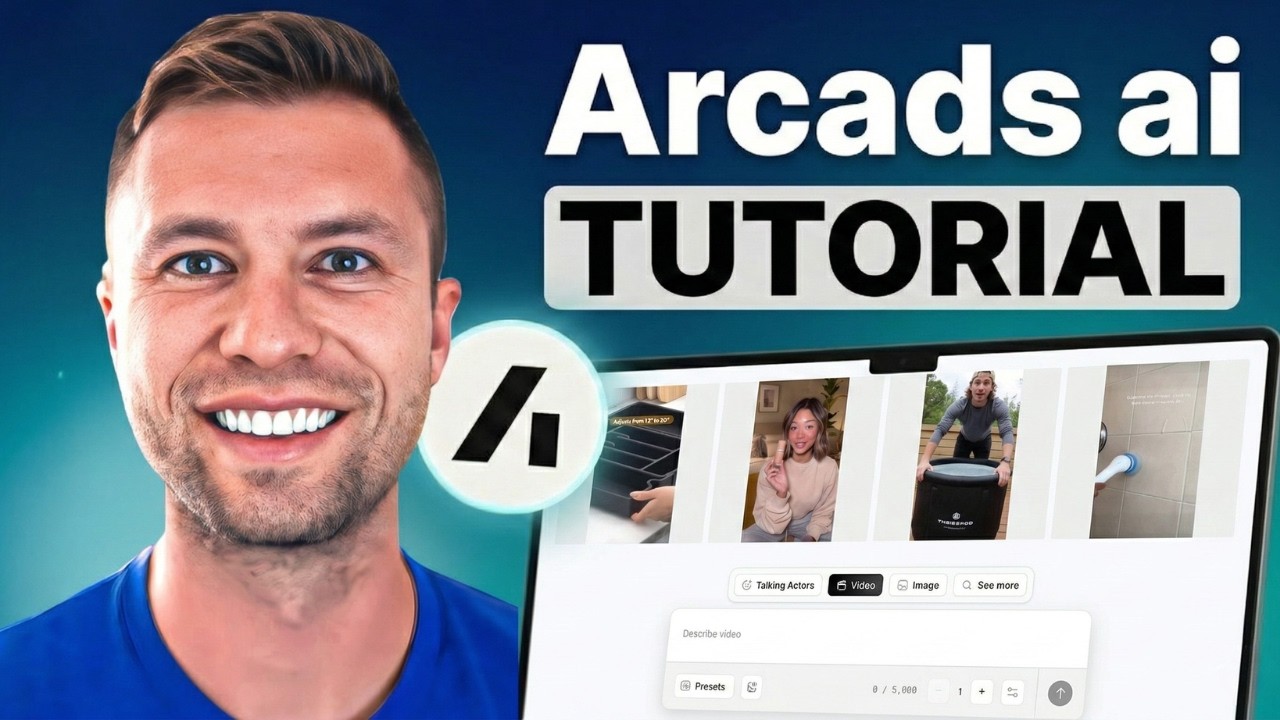

The next screenshots should compare workflow, not marketing pages.
`arcads-talking-actor-setup-2026-08-17.png`
`creatify-product-extraction-2026-08-17.png`
`arcads-creatify-same-brief-output-2026-08-17.png`
Run one controlled campaign test.
Use the same inputs
- One product and landing page
- One 20–30 second script
- One offer and call to action
- The same format and target duration
Record the real cost
- Credits spent on failed drafts
- Minutes of human editing
- Number of publishable variants
- Support response when something fails
If you need one low-risk first move, run the brief through Creatify's free plan. If the actor performance is clearly insufficient and actor-led authenticity is the priority, prepare a tightly scoped Arcads paid test with the refund terms already understood.
Neither tool fixes a weak ad strategy.
Do not buy Arcads for this job
- You need product URL import to create the first draft.
- You need the lowest-risk way to learn whether AI ads fit your brand.
- Your team cannot review actor fit, claims, and brand safety before launch.
Do not buy Creatify for this job
- The actor performance itself is the bottleneck.
- You already have strong scripts and only need many presenter variations.
- You need to judge synthetic actor realism more than ad assembly speed.